<< back

Rosalind

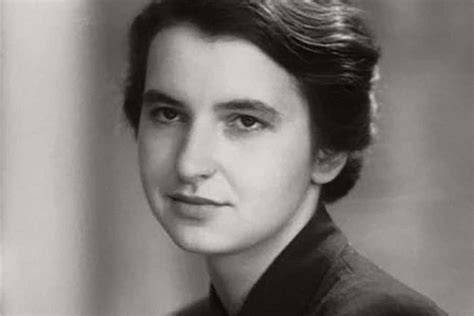
Rosalind is a new chamber opera about the extraordinary woman who played a vital role in the discovery of the double helix and is scheduled to be performed in April 2026 in the Chapel of King’s College London. It is being promoted by Helix Music (charity number 1213628), and will be its first project.

Rosalind tells the story of the brilliant scientist, Rosalind Franklin, and her seminal work, crucial to the deciphering of the structure of DNA. Overlooked and misrepresented for many years, the opera explores not only the infamous story of how her research was used by others but also examines the isolation she felt in the profoundly male scientific world of the 1950s. She was not recognised in her lifetime, so Rosalind provides an interesting historical perspective through an opera of new music. There was a race in the scientific world of the 1950s to discover the structure of DNA. The laboratories of KCL, and the Cavendish Laboratory were at the forefront of research.

The opera had a first run in a Studio performance in the National Opera Studio in 2022. It was received extremely well by both the performers and the small audience who attended. Some revision resulted from this first performance and a staged production is now scheduled to take place at King’s College London who are very keen for a performance to be staged there, as Rosalind’s extraordinary scientific breakthrough took place at the university. It will be performed in the Grade 1 listed chapel, adjacent to Somerset House. Most significantly, the chapel is in the same building and only a few yards away from the actual rooms in which Rosalind worked and, unlike most of the rest of the building, is completely unchanged from Rosalind’s time. There is something very special about this tangible connection.

The libretto was written by Clare Heath who has a deep personal connection with the story as her grandfather, Sir Lawrence Bragg was in charge of the Cavendish Laboratory in Cambridge where Crick and Watson were working at the time. The music is written by Peter Hugh White who works as a composer in London and Guildford, and is scored for 12 singers, and a small chamber orchestra comprising a string quartet, wind quintet, double bass and piano.

Musical Director: Mark Austin
Director: James Hurley
Designer: Ceci Calf